
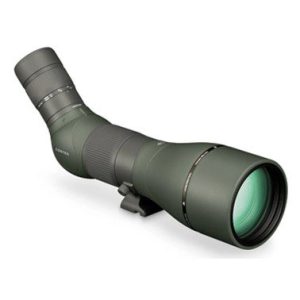
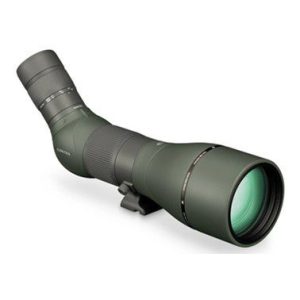
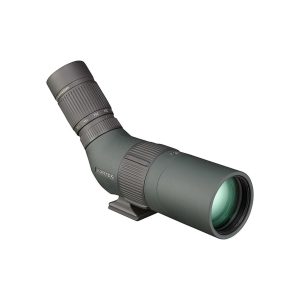
Vortex Spotting Scopes
Free delivery
on orders over £60
NEXT DAY DELIVERY
On in stock items
PAYPAL
3 interest free payments
Trade In
upgrade
Order Online
safe and secure
FILTER BY PRICE
CATEGORY
Free delivery
on orders over £60
NEXT DAY DELIVERY
On in stock items
PAYPAL
3 interest free payments
Trade In
upgrade
Order Online
safe and secure
FILTER BY PRICE
CATEGORY
What is a spotting scope used for?
A spotting scope is designed for detailed, long-distance viewing. It’s commonly used for birdwatching, wildlife observation, and nature study. The high magnification and clarity make it perfect for spotting fine details that binoculars may miss. For travel, lighter models with smaller objective lenses are easier to carry, such as the Hawke Endurance ED 50mm spotting scope. For those looking for long range observation take a look at the Kowa Prominar TSN-99a.
How do I choose the right spotting scope?
To choose the right model, consider how and where you’ll use it. Look at magnification range, objective lens size, weight, and whether you prefer angled or straight viewing. Waterproofing, image clarity, and ease of focusing are also important if you plan to use it outdoors regularly. All our spotting scopes are waterproof and nitrogen filled, allowing them to be used in all conditions.
What brands of spotting scope do you sell?
Choose from trusted brands like Hawke, Kite, Kowa, Opticron, Viking, Vortex, and Zeiss. Many models feature a zoom eyepiece and a large objective lens to ensure bright, detailed views, even at higher magnification levels.
What's the difference between angled and straight spotting scopes?
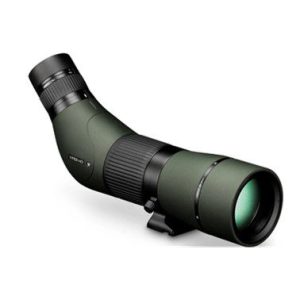
Angled scopes have a slanted eyepiece, making them ideal for sharing between users of different heights or for viewing subjects above the horizon. They will also allow you to use a smaller tripod as the scope will not have to be raised up as high.
Straight spotting scopes are easier for quick target acquisition and are generally preferred for use in hides or when viewing subjects at eye level.
Are spotting scopes better than binoculars?
They offer higher magnification than binoculars, making them better suited for viewing subjects at a distance with greater detail. Binoculars are more portable and better for scanning wider areas quickly, so the best choice depends on your activity and viewing needs.
Do I need a tripod for my spotting scope?
A tripod is strongly recommended, especially at higher magnifications. It stabilises the image, reduces hand shake, and allows for more comfortable, extended viewing sessions whether you’re out in the field or using it from a fixed location.